



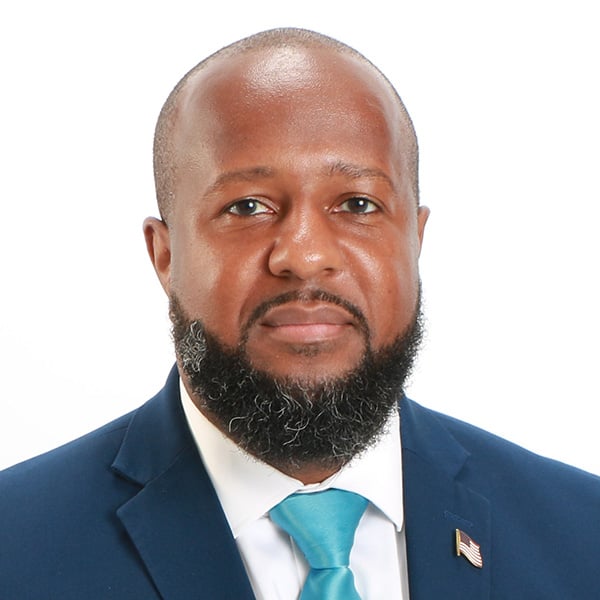
Candidate Q&A
Why are you running?
I am running because too many people are working hard, following the rules, and still being left behind by a government that has lost touch with reality.
For too long, Washington has been dominated by career politicians who talk about problems they’ve never had to live with and pass laws they’ve never had to implement. I’ve practiced law in federal and state courts, and I’ve seen firsthand what happens when policy meets real life—when vague laws, weak oversight, and political cowardice hurt families who have no lobbyist and no safety net. That experience changed how I see public service.
I come from the struggle, and I understand that government should be a tool for solving problems, not a stage for performance. I’m running to bring seriousness, accountability, and constitutional discipline back to Congress. That means lowering the cost of living—especially healthcare—fixing a broken immigration system, protecting civil rights, and strengthening the legislative branch so it actually does its job.
I believe in a government that works for working people, respects individual liberty, and tells the truth—even when it’s uncomfortable. I’m not running to protect a party, a donor class, or a political career. I’m running because families deserve leadership grounded in reality, guided by fairness, and focused on results.
This campaign is about restoring trust by doing the work—writing better laws, enforcing them fairly, and never forgetting who this office belongs to: the people.
What do you think is the most pressing issue facing your constituents and how do you plan on addressing it?
The most pressing issue facing my constituents is affordability—the simple fact that the cost of everyday life is rising faster than people’s ability to keep up.
Families across our communities are doing everything right, yet they’re being squeezed by healthcare costs, housing, childcare, education, and basic necessities. Too many people are one medical bill, rent increase, or unexpected expense away from financial crisis. This isn’t about lifestyle choices—it’s about a system that has become too expensive and too unforgiving.
I plan to address affordability by focusing on the costs people feel most. First, I will fight to lower healthcare costs by establishing a fully government-funded public option that eliminates premiums and out-of-pocket expenses, including mental health care. No family should go broke because someone gets sick.
Second, I will work to reduce pressure on housing and childcare by investing in affordable housing, supporting childcare access, and cutting unnecessary red tape that drives up costs for working families.
Third, I will push for policies that put more money back in people’s pockets—reducing wasteful spending, re-prioritizing the federal budget, and using those resources to fund education, job training, and other investments that lower long-term costs instead of shifting them onto families.
Affordability is about dignity and stability. My goal is to make sure people can plan for the future, care for their families, and live without constant financial anxiety. Government should make life more manageable, not harder—and that’s the standard I will bring to this office.
What do you think federal immigration reform should look like?
Federal immigration reform must be serious, lawful, and humane, and it has to move beyond slogans on both sides. We already know what workable reform looks like—because Congress once came close to passing it.
I believe reform should be modeled in large part on the Gang of Eight bill, a bipartisan effort that combined border security, due process, and a realistic path forward for undocumented immigrants who are contributing to our communities. That bill recognized a basic truth: enforcement alone does not work, and compassion without structure is not sustainable.
First, we need a system that is functional and orderly. That means modernizing border management, fixing the asylum process so claims are decided quickly and fairly, and focusing enforcement on real threats—such as violent criminals and traffickers—not families and workers.
Second, we need a lawful pathway to status for long-term undocumented immigrants who work, pay taxes, and obey the law. Keeping millions of people in permanent legal limbo hurts workers, depresses wages, and destabilizes communities. Bringing people out of the shadows strengthens the rule of law—it doesn’t weaken it.
Third, immigration reform must include due process and humane treatment. We should invest in immigration courts and case processing instead of relying on mass detention and private contractors that waste money and violate basic rights.
Finally, Congress must do its job. Immigration cannot be governed by executive orders and political stunts. A bipartisan, legislative solution—like the Gang of Eight framework—is the only way to create a system that is fair, secure, and durable.
That is the kind of reform I will fight for: practical, constitutional, and grounded in reality.
How should the Senate address the rising costs of health care?
The Senate must address rising healthcare costs by treating healthcare as essential infrastructure, not a profit center—and the most effective way to do that is by implementing the Universal Care Plus Act.
Under Universal Care Plus, every American would have access to comprehensive healthcare through a fully government-funded system, with no premiums, no deductibles, and no out-of-pocket costs, including for mental health care. The current system forces families to pay more every year for less coverage, while administrative waste and middlemen drive up costs without improving care. Universal Care Plus simplifies the system and puts patients first.
The Senate should also use its authority to negotiate prescription drug prices, and maintain a private option to ensure freedom of choice and competition in the marketplace. We already spend more per person on healthcare than any other nation—yet outcomes are worse. The problem is not a lack of money; it’s how the money is spent.
Universal Care Plus would lower costs by pooling risk, reducing bureaucracy, and focusing resources on care instead of insurance profits. It would also give small businesses and working families stability and predictability, freeing them from fear of medical debt.
Rising healthcare costs are the single biggest driver of financial insecurity for families. Implementing Universal Care Plus is not just healthcare reform—it’s cost-of-living reform. The Senate has the power to fix this system, and it must act with urgency, seriousness, and the courage to put people over special interests.
What approach would you take on tax policy?
My approach to tax policy starts with a simple principle: working people are already paying enough. I do not believe in raising taxes on anyone. The problem in Washington isn’t that Americans are undertaxed—it’s that government spends too much on the wrong things and allows too much waste to go unchecked.
Instead of raising taxes, I would focus on cutting wasteful and inefficient spending, especially programs that exist primarily to benefit special interests, contractors, or layers of bureaucracy rather than the public. Strong oversight, tighter procurement rules, and eliminating duplicative programs can save billions without hurting families or essential services.
I also believe we need to be more serious about diversifying revenue streams without increasing tax burdens. That includes recovering money lost to fraud and abuse, enforcing existing laws so large corporations and powerful actors pay what they already owe, and ensuring federal assets and programs are managed efficiently and responsibly.
Tax policy should encourage growth, work, and innovation—not punish people for getting ahead or make it harder for small businesses to survive. A simpler, more transparent system paired with disciplined spending is the best way to strengthen the economy and restore public trust.
My goal is fiscal responsibility without higher taxes: a government that lives within its means, spends smarter, and respects the fact that every dollar it spends belongs to the people.
Should any changes be made to the size of the Supreme Court or the confirmation process?
I do not support changing the size of the Supreme Court, and I do not believe court expansion is the answer to the problems we’re facing. Altering the size of the Court would only escalate partisan retaliation and further undermine public trust in an institution that depends on stability and legitimacy.
The confirmation process also does not need structural overhaul. The Constitution already provides a clear framework, and the real issue is not the process itself but the way it has been abused for political advantage. Restoring norms of good faith, seriousness, and respect for the Court’s role is more important than rewriting the rules.
Where reform is necessary is in accountability and ethics. The Court must operate under clear, enforceable ethical standards so that independence does not become unaccountability. Congress has a role to play in ensuring transparency without compromising judicial independence.
In short, we should not change the size of the Court or redesign the confirmation process. We should focus on restoring integrity, enforcing ethical standards, and strengthening the constitutional balance among the branches of government. That approach protects the Court, the Constitution, and public confidence in the rule of law.
Do you believe the structure of the Senate leads to legislative gridlock? What would you change?
No, I do not believe the structure of the Senate is the primary cause of legislative gridlock. The Constitution deliberately designed the Senate to be slower, more deliberative, and resistant to sudden swings in political pressure. That structure protects minority viewpoints and encourages stability, not paralysis.
The real cause of gridlock is how Senators choose to use the institution, not the institution itself. Too often, lawmakers avoid compromise, prioritize messaging over governing, and use procedural tools as political weapons instead of safeguards. That is a failure of leadership and responsibility, not constitutional design.
I do not support changing the fundamental structure of the Senate. Instead, what needs to change is the culture: Senators must be willing to do the hard work of legislating—negotiating in good faith, holding hearings, writing clear laws, and taking ownership of outcomes.
Gridlock will not be solved by weakening the Senate or bypassing it. It will be solved by restoring seriousness, accountability, and a commitment to governing. The Senate works when its members do.
What is the most pressing foreign policy issue facing the country and what role should the Senate play in dealing with it?
The most pressing foreign policy issue facing the country is restoring American credibility and stability in a world that has become more dangerous and less predictable.
Right now, adversaries are testing U.S. resolve, allies are questioning our reliability, and global conflicts are increasingly interconnected—through energy markets, supply chains, cyber threats, and migration. When American leadership appears inconsistent or reactive, it creates instability that ultimately raises costs and risks for families at home.
The Senate plays a critical role in addressing this challenge. First, it must reassert its constitutional authority over foreign policy, particularly its responsibility to debate and authorize the use of force. Endless or undeclared conflicts weaken democracy and public trust. The Senate should demand clear objectives, timelines, and accountability before committing American lives and resources.
Second, the Senate must strengthen alliances through serious diplomacy. That means supporting treaty obligations, confirming qualified diplomats, and using oversight to ensure foreign aid and military assistance serve clear strategic and humanitarian goals—not corruption or political theater.
Finally, the Senate must focus on long-term stability by investing in diplomacy, economic resilience, and global cooperation, rather than relying solely on military responses. Strong foreign policy is about prevention, not just reaction.
America is strongest when it leads with principle, clarity, and restraint. The Senate’s role is to provide that steadiness—by legislating responsibly, overseeing the executive branch, and ensuring U.S. power is used wisely and lawfully.
How do you view AI and the role the government should play in its regulation?
Artificial intelligence has enormous potential, but without clear rules it also poses serious risks—especially to human jobs, economic stability, and fairness. I believe the federal government must play a strong, proactive role in regulating AI so innovation serves people, not replaces them.
Left entirely to the market, AI will be used to cut labor costs, consolidate power, and displace workers faster than our economy can absorb. That is not progress—it’s instability. Federal regulation is necessary to set guardrails that protect jobs, require transparency, and ensure companies are accountable for how AI is deployed.
The government should establish clear standards around when and how AI can replace human labor, require impact assessments before large-scale deployment, and invest in worker protections, retraining, and transition support. AI should augment human work—not eliminate it without responsibility.
Congress also has a role in protecting privacy, preventing discriminatory outcomes, and ensuring critical decisions—such as in healthcare, housing, employment, and criminal justice—are not handed over to unaccountable algorithms.
The goal is not to stop innovation, but to shape it. Technology should raise living standards and expand opportunity, not hollow out the workforce or concentrate wealth in fewer hands. Responsible federal regulation is the only way to ensure AI strengthens our economy and our democracy rather than undermining them.
How will your approach differ from or mirror that of U.S. Sen. Dick Durbin?
Sen. Dick Durbin has had a long career of public service, and on some core values—like respect for the Constitution, civil rights, and the importance of governing seriously—there is overlap. Where my approach differs is in generation, lived experience, and urgency.
I am 42 years old, from the South Side of Chicago, and I come from a different reality than the one that shaped Washington decades ago. I’ve lived through rising costs, shrinking opportunity, and institutions that no longer feel responsive to everyday people. I’ve worked as a prosecutor inside systems that are broken and seen how policy decisions land on families who don’t have wealth, influence, or insulation from government failure.
My approach is more grounded in implementation and accountability. Having practiced law in federal and state courts, I focus less on symbolism and more on whether laws actually work in practice. I am less patient with performative politics and more focused on restoring Congress’s backbone—writing clear laws, conducting real oversight, and taking responsibility instead of delegating power away.
Where Senator Durbin represents continuity and institutional experience, I represent a new generation of leadership shaped by lived struggle, rising inequality, and a demand for results. I bring urgency to affordability, healthcare, and accountability because these aren’t abstract issues—they’re daily pressures on real people.
My goal is not to discard the past, but to build on it with leadership that reflects today’s reality and tomorrow’s challenges.
How would you describe the current state of your party and what changes or new approaches would you like to see your party adopt?
The current state of my party—the Democratic Party—is one of talent without direction. There are good ideas and good people, but too often there is a lack of clear leadership, message discipline, and follow-through. Voters feel that confusion, and it shows up as frustration, disengagement, and distrust.
Too often the party reacts instead of leads. It chases headlines, manages internal factions, or relies on fear of the other side rather than offering a clear, affirmative vision that speaks to people’s daily lives. That leaves working families unsure of what the party actually stands for—and whether it can deliver.
I believe the party needs a more grounded, problem-solving approach. That starts with focusing relentlessly on affordability, healthcare, public safety, and accountability—issues people feel every day—rather than abstract messaging or performative politics. We need to speak plainly, govern seriously, and be honest about tradeoffs.
The party also needs leaders who are willing to take responsibility, not just credit. That means strengthening Congress, doing the hard work of legislating, and stopping the habit of outsourcing decisions to executive action or courts while claiming victories.
Most importantly, the party needs to reconnect with lived experience—especially in working-class and overlooked communities. Direction comes from listening, leadership comes from action, and trust comes from results. That is the shift I want to help lead.